Resources
Best Practices
Quick Tips
Not sure how to use the book? Here are six easy steps to follow.
- Read the sentence
- Notice the starting sound
- Move together
- Say the sound while moving
- Repeat
- Most importantly, have fun!
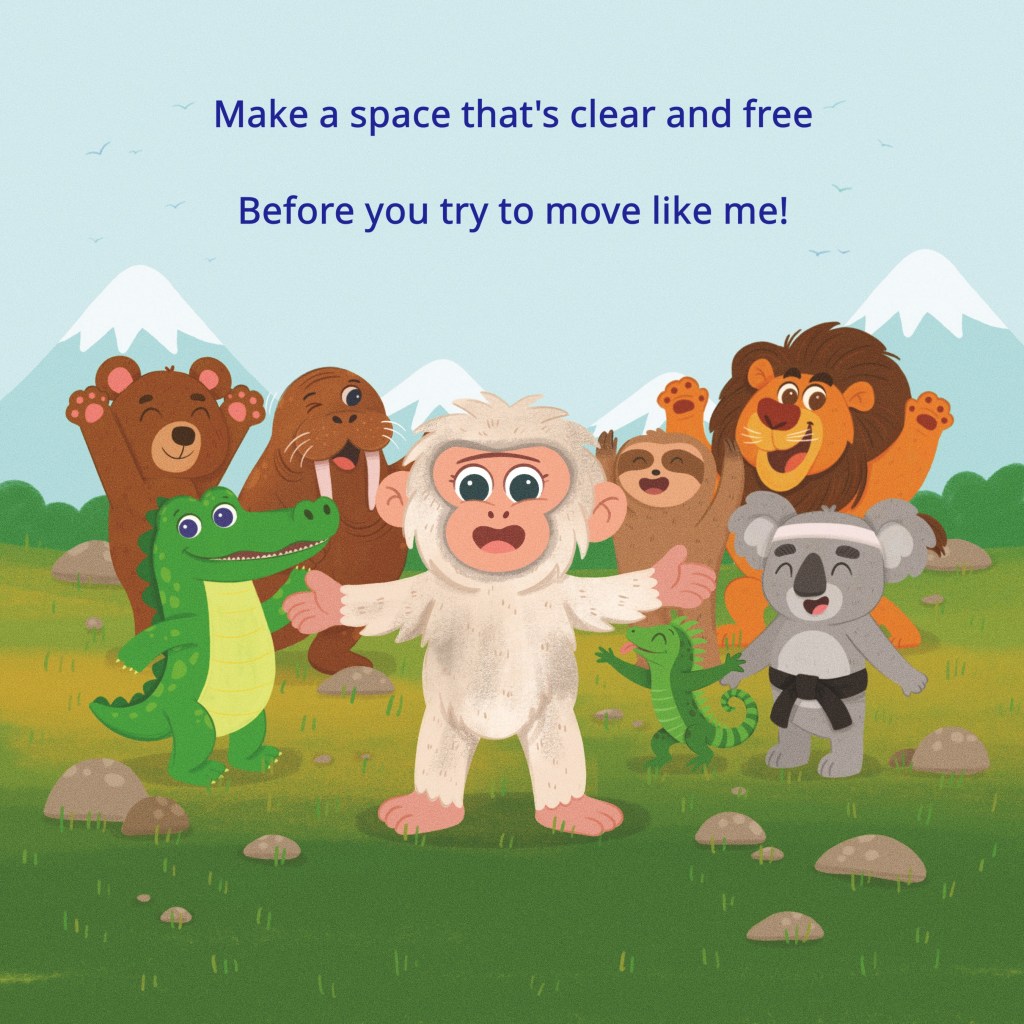
Make Sure to Move!
The primary goal of March Like a Monkey is to move.
Written for pre-readers and early readers (ages 3 – 7), March Like a Monkey is designed to be read with an adult. Because movement is a primary goal of the book, both kids and adults are encouraged to get up and try each movement.
Every page, from A to Z, features a distinct action that readers can easily attempt. Fun, rather than perfection, is the goal – whether you make it silly, go for slow-mo, or want to challenge yourself, March Like a Monkey is about moving in whatever way feels good to you. Trying each action alongside your young reader(s) is an opportunity to model both this spirit and how to practice literacy at the same time (more on this below).
Wherever possible, cross-lateral, full body movements are strongly recommended. Cross-lateral movements — where the body crosses its midline — are commonly incorporated into early childhood and occupational therapy practices because they support coordination, motor integration, and executive functioning. These foundational skills are closely connected to early academic development, including reading and writing (see research here). Some movements – like march, lunge, and crawl – are naturally cross-lateral, but most can be adapted with this goal in mind.
Practice Literacy While You Move
March Like a Monkey is deliberately alliterative and follows a predictable pattern that provides multiple embedded opportunities to practice early literacy skills. Below is an example set of instructions for how the book could be implemented. These are just suggestions; there are many possible ways to adapt this book based on your child’s learning profile and reading goals.
Each page starts with an alliterative sentence that introduces the letter. For example:
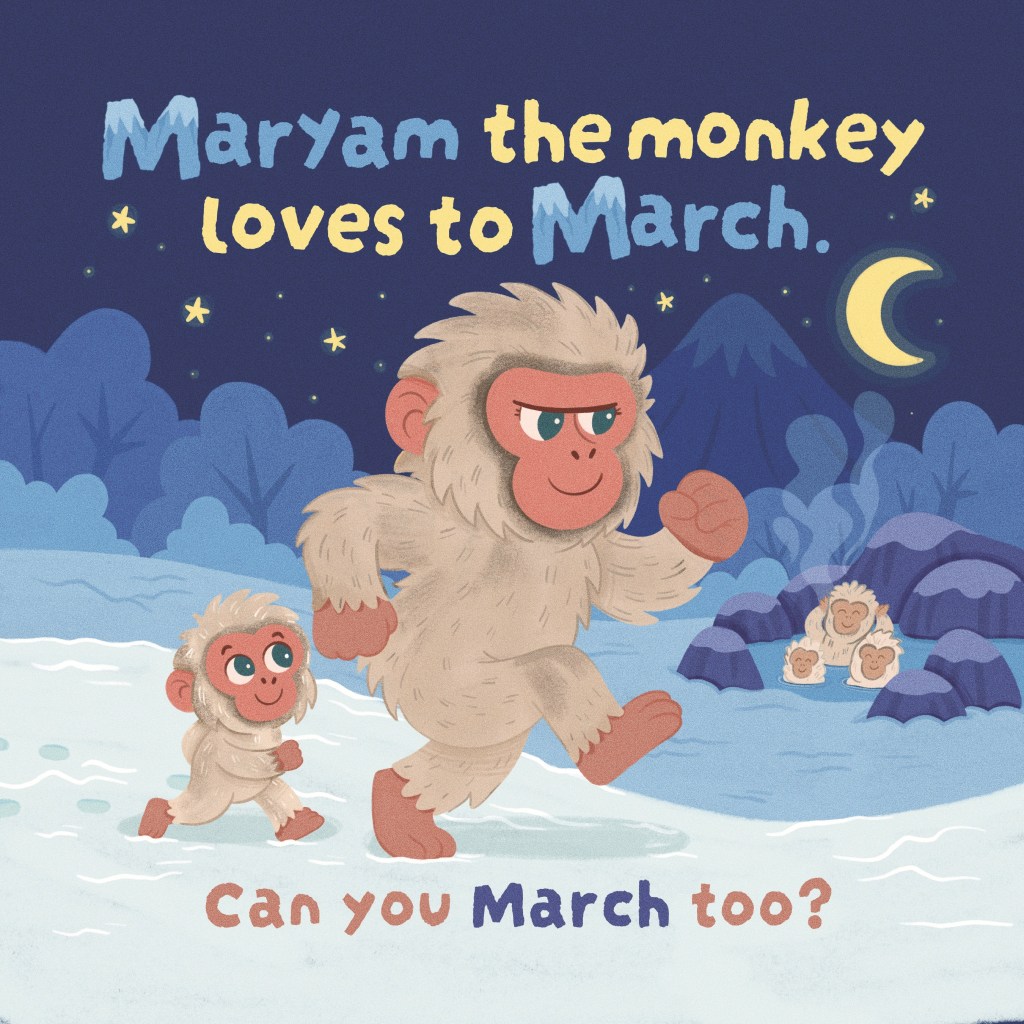
“Maryam the monkey loves to March.”
Consider:
- Reading the sentence
- Noting the starting sound (/m/)
- Exaggerating the sound
Each page then ends with an invitation to try each action. For example:
“Can you March too?”
Consider:
- Reading the sentence
- Doing the action
- Saying the sound (/m/) or name of the action while moving
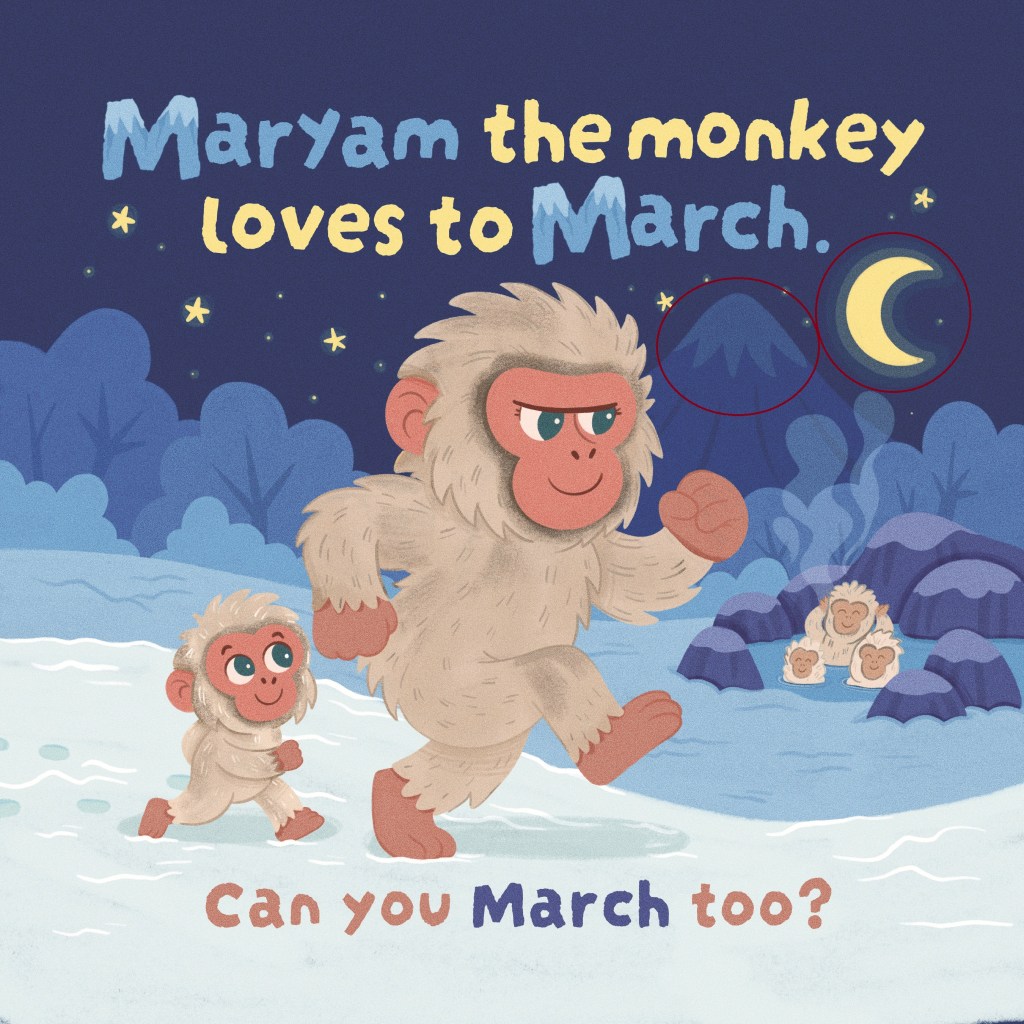
Every page also includes hidden elements that match its letter; a full list of hidden elements is available here. These objects provide an additional opportunity to practice that sound, while building vocabulary. For example, note the moon and mountain below:
Note: on the vowel pages, the main sentence focuses on short vowel sounds. Hidden objects may introduce long vowel patterns, offering natural opportunities to compare sounds and notice differences.
Remember: there are many ways to adapt practice, depending on your learner’s age, reading level, and goals. More recommendations can be found here.
 March Like a Monkey