I Move, Therefore I am
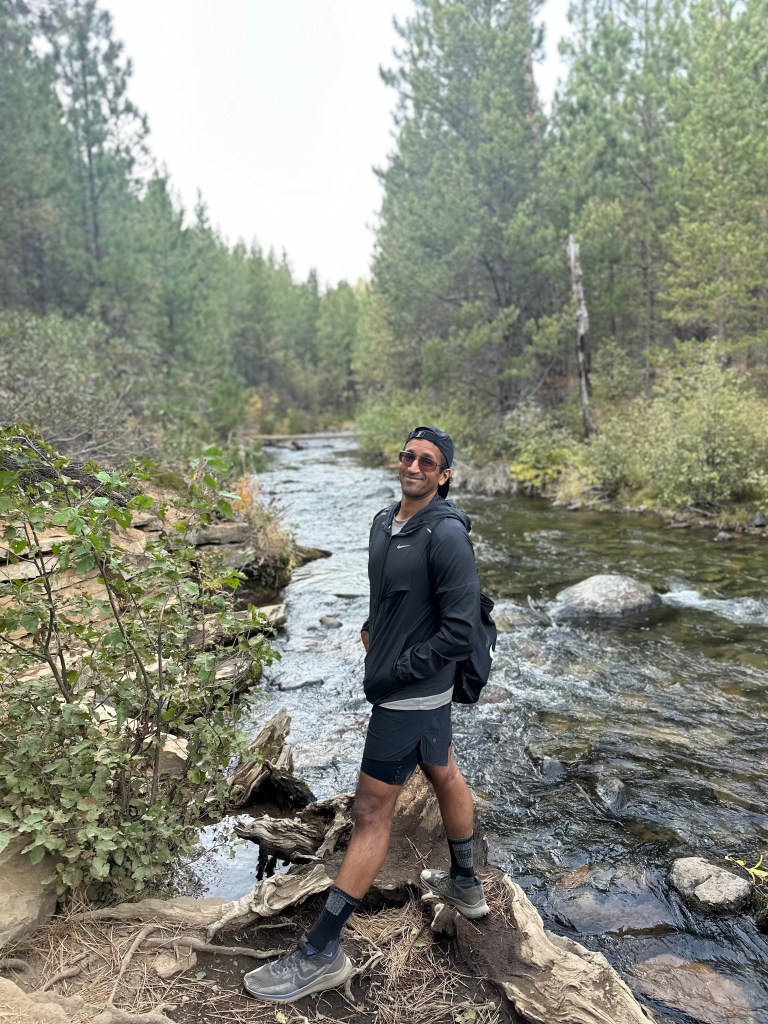
Hey there! I’m Shyam Srinivasan, and I love to move. Movement has been essential to my life; it is deeply connected to my overall well-being, physical and mental health, confidence, sense of purpose, and much more. Simply put, I believe in movement as medicine.
And, as an educator, I’ve also seen how movement can transform learning into interactive, play-based experiences that engage all children — especially diverse learners. I wrote March Like a Monkey to share the joy movement has brought me with kids everywhere and to help make learning more accessible and enjoyable for all learners.
Why Movement?
It’s common knowledge that movement is good for you — we all know that regular exercise can improve health and extend our lifespans. But movement does so much more for us than this: it has the power to bring us joy, help us cope with grief, support social connection, give us hope, and so much more. (Sidebar: Kelly McGonigal’s book, The Joy of Movement, is a great read on this topic).
Given its plentiful benefits, I believe that supporting children in developing an early love for movement is immensely important in its own right. However, as an educator, I also know that movement has been proven to improve learning in numerous ways (see more):
- Helps the brain get ready to learn, improving attention and focus
- Supports self-regulation and emotional readiness
- Increases engagement and motivation
- Improves memory, retention, and recall
- Supports executive functioning skills
- Creates more inclusive and accessible learning experiences
I’ve seen firsthand how movement can improve learning outcomes for all students — and how it can be game-changing for children with learning differences.
Research also shows that when movement is intentionally integrated into early literacy instruction, it can support the development of foundational skills like letter — sound awareness and language development, especially for children who learn differently.
That’s why I believe in a whole brain, whole body, whole child approach to learning. And that’s why I wrote March Like a Monkey: to share an interactive, play-based learning experience that combines movement with early literacy skills.
So, how about it? Can you march like a monkey?
About Shyam
I didn’t begin my career in education. I started in the tech world as a product manager, building digital tools. Over time, though, I felt pulled toward work that could have a more direct impact on young learners and contribute to a more equitable education system.
Since then, I’ve worked with schools and learning organizations to design tutoring programs, build curriculum, and support students directly — especially in areas like executive functioning, attention, and confidence. Much of my work has focused on supporting neurodivergent learners, including students with ADHD, dyslexia, and autism.
Across these experiences, one pattern kept showing up: when kids were allowed to move, everything changed. That realization — combined with my own love of movement — is what led me to write March Like a Monkey.
True to form, when I’m not working with students or experimenting with ideas for my next book, I’m usually moving. You can find me marching like a monkey, balancing like a bear, and galloping like a goat around the San Francisco Bay Area.
 March Like a Monkey